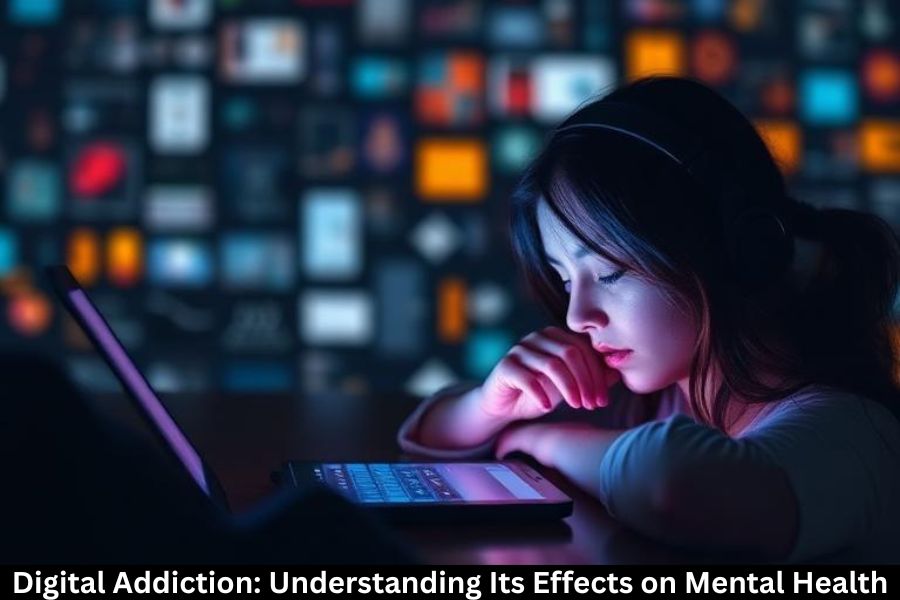
In today’s hyperconnected world, digital devices have become an essential part of everyday life. Smartphones, social media, video games, and online platforms offer endless convenience, entertainment, and opportunities for learning. However, this constant access to technology has also led to a growing concern: digital addiction. As people spend more time online, the line between healthy use and dependency is becoming blurred, with significant impacts on mental health.
What Is Digital Addiction?
Digital addiction refers to the compulsive and excessive use of digital devices or online platforms, leading to disrupted daily routines, reduced productivity, and emotional distress. Common forms include:
- Social media addiction
- Smartphone dependence
- Online gaming addiction
- Compulsive internet browsing
- Video streaming or binge-watching addiction
Although not officially classified as a clinical disorder in all regions, it shares similarities with behavioral addictions, making it a growing global concern.
How Digital Addiction Develops
Digital platforms are designed to capture attention. Features like notifications, infinite scrolling, and personalized recommendations encourage users to stay online longer. Over time, this repeated engagement creates habits—and sometimes unhealthy dependencies.
Factors contributing to digital addiction include:
- Fear of missing out (FOMO)
- Social validation through likes and comments
- Stress or loneliness leading to online escape
- Easy access to devices
- Reward-driven algorithms
Effects of Digital Addiction on Mental Health
Increased Anxiety and Stress
Constant notifications, social comparisons, and pressure to stay updated can heighten anxiety. Many users feel stressed when they are away from their devices, fearing they might miss something important.
Sleep Disturbances
Blue light from screens disrupts melatonin production, making it harder to fall asleep. Late-night scrolling or gaming can lead to insomnia, poor sleep quality, and fatigue.
Depression and Low Self-Esteem
Social media often highlights unrealistic lifestyles and filtered images. This comparison can lead to feelings of inadequacy, sadness, and lowered self-worth.
Reduced Attention Span
Excessive screen time can weaken the brain’s ability to concentrate. Constant switching between apps and notifications trains the mind to seek quick stimulation, making sustained focus difficult.
Emotional Dysregulation
Digital highs—such as receiving likes or winning games—can create emotional dependence. Without these stimuli, individuals may feel irritable or restless.
Social Withdrawal
Ironically, heavy digital use can reduce real-life social interactions. People may choose online communication over face-to-face relationships, leading to isolation and loneliness.
Physical Health Consequences
Digital addiction also affects physical well-being through:
- Eye strain and headaches
- Neck and back pain (“tech neck”)
- Sedentary lifestyle leading to obesity or reduced fitness
- Poor posture and muscle stiffness
These physical issues can further impact mental health over time.
Signs You May Be Digitally Addicted
You might be experiencing digital addiction if you:
- Check your phone constantly, even without notifications
- Feel anxious when away from devices
- Spend more time online than intended
- Ignore work, study, or social responsibilities
- Lose sleep due to late-night digital use
- Prefer virtual interactions over real-life connections
- Feel irritable when you can’t access your device
Healthy Ways to Manage Digital Use
Set Screen-Time Limits
Use built-in digital wellness tools to track and reduce usage.
Create Device-Free Zones
Keep phones away during meals, conversations, or before bed.
Practice Mindfulness
Meditation and deep breathing can help reduce compulsive behaviors.
Schedule “Tech Breaks”
Take short breaks from screens every hour to rest your eyes and mind.
Engage in Offline Activities
Spend time exercising, reading, or socializing face-to-face.
Turn Off Unnecessary Notifications
Reducing alerts minimizes distractions.
Seek Professional Help if Needed
If digital habits feel uncontrollable or impact mental health, speaking to a psychologist or counselor can be beneficial.
Conclusion
Digital technology is a powerful tool that enhances modern life, but excessive use can negatively affect mental health. Understanding the signs of digital addiction and adopting healthy habits can help individuals maintain a balanced relationship with technology. By setting boundaries and being mindful of how we use digital platforms, we can enjoy the benefits of the digital world without sacrificing mental well-being.
FAQs
1. What is digital addiction?
Digital addiction is the compulsive and excessive use of digital devices or online platforms—such as smartphones, social media, gaming, or streaming—that interferes with daily life, productivity, and emotional well-being.
2. What causes digital addiction?
Digital addiction often develops due to:
- Constant access to devices
- Reward-driven algorithms
- Fear of missing out (FOMO)
- Social validation through likes and comments
- Stress, loneliness, or boredom
3. What are the common types of digital addiction?
The most common forms include:
- Social media addiction
- Smartphone dependency
- Online gaming addiction
- Compulsive internet browsing
- Video streaming or binge-watching addiction
4. How does digital addiction affect mental health?
Digital addiction can lead to:
- Increased anxiety and stress
- Depression and low self-esteem
- Sleep disturbances
- Reduced attention span
- Emotional instability
- Social withdrawal and loneliness
5. Can excessive screen time affect sleep?
Yes. The blue light from screens suppresses melatonin, a hormone that helps you sleep. Staying online late at night can lead to insomnia, poor sleep quality, and daytime fatigue.