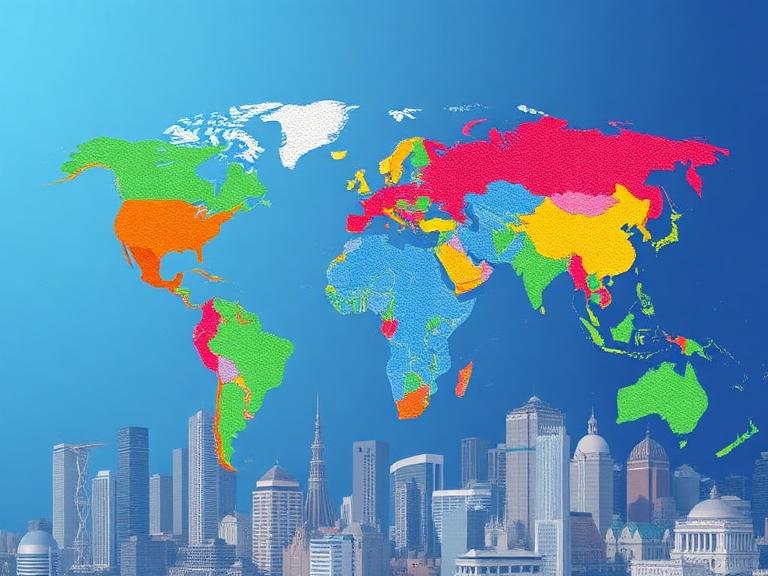
Globalization has become one of the most powerful forces shaping the modern world. It refers to the growing interconnectedness of countries through trade, communication, technology, and cultural exchange. As nations become increasingly interdependent, globalization influences not only economic systems but also the cultural identities of societies around the globe. Its impact is vast, offering both opportunities and challenges that continue to shape the future of humanity.
Globalization and Economic Growth
One of the most visible effects of globalization is its impact on economies. By opening borders to trade and investment, globalization creates opportunities for countries to expand their markets and strengthen industrial growth.
Key Economic Benefits:
- Increased trade and investment: Countries can export goods, attract foreign investors, and benefit from international partnerships.
- Job creation: Global markets create new employment opportunities, especially in developing nations.
- Access to technology: Globalization allows countries to adopt modern technologies that boost productivity and innovation.
- Economic integration: Regional and international trade agreements help countries collaborate for mutual benefit.
However, globalization also brings challenges such as inequality, exploitation of labor, and increased competition that can threaten small or local businesses.
Cultural Exchange and Diversity
Cultural globalization has dramatically changed the way people communicate, learn, and interact with one another. The spread of ideas, values, food, music, and lifestyle trends has made the world more interconnected.
Positive Cultural Impacts:
- Exposure to new cultures: People can experience global traditions, cuisine, fashion, and entertainment.
- Improved communication: Social media and digital platforms connect people across borders.
- Cultural understanding: Cross-cultural interaction encourages tolerance and reduces stereotypes.
Despite these benefits, globalization can also cause cultural homogenization, where dominant cultures overshadow smaller or traditional ones.
The Threat to Cultural Identity
While globalization encourages cultural exchange, it also raises concerns about the loss of cultural uniqueness. Western influences in media, clothing, and consumer behavior often dominate global markets, causing traditional customs to fade in certain societies.
Challenges to Cultural Identity:
- Loss of local languages and traditions
- Decline in traditional arts and crafts
- Influence of global media on youth culture
Communities must balance global influences with the preservation of their heritage to maintain cultural diversity.
Effects on Developing Countries
For developing nations, globalization can be a double-edged sword. On one hand, it creates opportunities for economic growth, foreign investment, and job creation. On the other hand, these countries may become overly dependent on global markets or multinational corporations.
Common Issues Faced:
- Income inequality: Wealth may concentrate among a small group while others remain disadvantaged.
- Exploitation of labor: Global companies sometimes underpay workers to reduce costs.
- Environmental degradation: Unregulated industries can harm the environment in pursuit of profit.
To benefit fully, developing countries need strong policies and sustainable growth strategies.
Technology: The Driving Force of Globalization
Advancements in technology—especially the internet, transportation, and communication tools—have accelerated the process of globalization. Air travel, smartphones, and digital platforms make it easy to share ideas and conduct business across borders.
Key Technological Impacts:
- Faster communication
- Growth of e-commerce
- Global supply chain efficiency
- Digital learning and remote work
Technology has transformed globalization into a fast, continuous, and unavoidable phenomenon.
The Future of Globalization
As nations become more interconnected, globalization will continue to evolve. The world is shifting toward digital economies, cross-cultural collaborations, and global problem-solving. However, political tensions, economic inequality, and cultural preservation will remain ongoing challenges.
Future Outlook:
- Increased digital trade
- Greater focus on sustainability
- Growth of multicultural societies
- Emerging global leadership from developing countries
Conclusion
Globalization has profoundly influenced both cultures and economies, connecting people and nations in unprecedented ways. While it brings economic growth, cultural diversity, and technological advancement, it also raises concerns about inequality and cultural loss. To make globalization more inclusive and sustainable, countries must work together to ensure that both economic and cultural values are protected.
F&Qs
1. What is Globalization?
Globalization refers to the process of increased interconnectedness among countries through trade, communication, technology, travel, and cultural exchange. It makes the world more connected and interdependent.
2. How does globalization influence cultures?
Globalization allows people to share ideas, languages, food, music, and lifestyles across borders, creating a mix of cultures.
3. Does globalization promote cultural exchange?
Yes. People can easily experience movies, fashion trends, food, and traditions from other countries. This increases understanding and appreciation of global diversity.
4. Can globalization cause cultural loss?
Yes. As global brands, media, and western culture spread, some local languages, traditions, and customs may fade because younger generations adopt foreign lifestyles.
5. Does globalization improve communication?
Absolutely. Technology and social media allow people from different cultures to communicate instantly and learn from one another.