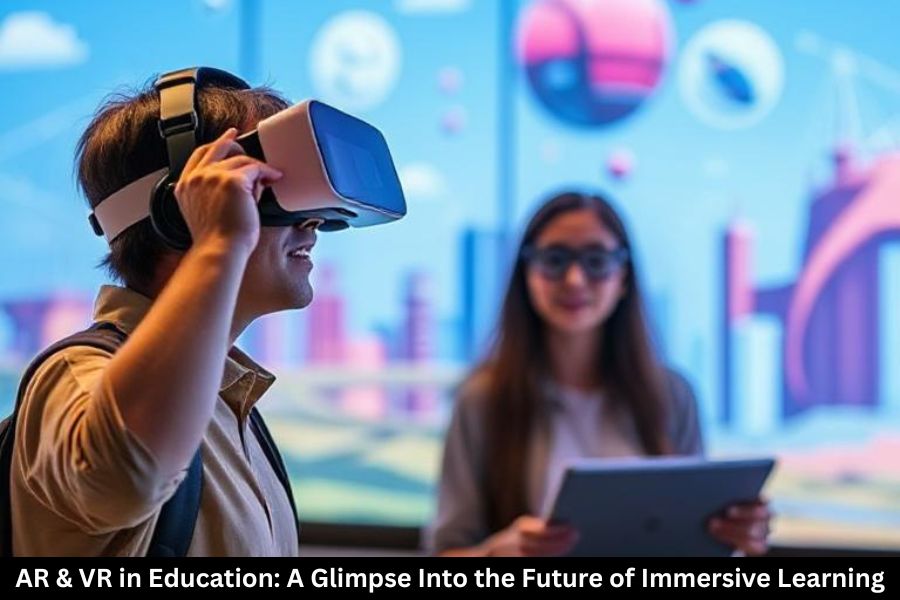
AR & VR in Education: A Glimpse Into the Future of Immersive Learning
Education has followed the same formula for centuries: sit down, listen, memorize, repeat. But let’s be honest—how much of that information actually sticks? In a world powered by technology and instant experiences, traditional education is starting to feel like watching a black-and-white movie in a 4K world. That’s where AR and VR step in, shaking things up and redefining how we learn.
Why Traditional Education Is Being Reimagined
Students today grow up with interactive screens, games, and digital worlds. Static textbooks and lectures often struggle to hold attention. AR and VR respond to this gap by turning learning into an experience rather than a chore.
The Rise of Experience-Based Learning
Instead of reading about ancient Rome, students can walk through it. Instead of memorizing anatomy diagrams, they can step inside the human body. Learning shifts from passive consumption to active participation—and that changes everything.
Understanding AR and VR Technologies
Before diving deeper, let’s clear up what these technologies actually are.
What Is Augmented Reality (AR)?
Augmented Reality overlays digital information onto the real world. Think of pointing your phone at a textbook image and watching it come alive in 3D. AR enhances reality without replacing it.
What Is Virtual Reality (VR)?
Virtual Reality creates a fully immersive digital environment. Put on a headset, and suddenly you’re on Mars, inside a cell, or standing in a medieval castle. The real world fades away.
Key Differences Between AR and VR
AR adds layers to reality. VR replaces reality. Both have powerful educational uses, depending on the learning goal.
How AR & VR Are Transforming Education
The biggest shift? Control moves from the teacher to the learner.
From Passive Learning to Active Exploration
Instead of being told how something works, students explore it themselves. They ask more questions, make discoveries, and learn through trial and error.
Learning by Doing, Not Memorizing
Hands-on experiences activate deeper learning pathways. It’s the difference between reading about swimming and actually jumping into the pool.
The Science Behind Immersive Learning
This isn’t just flashy tech—it’s neuroscience in action.
How the Brain Learns in 3D Environments
The brain processes spatial and sensory information more effectively than flat text. Immersive environments activate multiple regions of the brain simultaneously.
Memory, Engagement, and Retention
Students remember experiences far better than facts. AR and VR turn lessons into memorable events.
Emotional Connection and Learning Outcomes
Emotion strengthens memory. When students feel curiosity, excitement, or awe, learning sticks.
Benefits of AR & VR in Education
The advantages go far beyond “cool factor.”
Improved Student Engagement
Students are more focused, motivated, and curious in immersive environments.
Personalized Learning Experiences
AR and VR adapt to individual learning speeds and styles, helping no one get left behind.
Safe and Risk-Free Practice Environments
Students can make mistakes without consequences—essential for learning complex or dangerous skills.
AR & VR in K–12 Education
Young learners benefit enormously from immersive tools.
Making Classrooms Come Alive
Abstract concepts like space, history, or chemistry suddenly become tangible and exciting.
Supporting Different Learning Styles
Visual, auditory, and kinesthetic learners all benefit from immersive experiences.
Virtual Field Trips and Interactive Lessons
A classroom can visit the Great Barrier Reef or the surface of the moon—no permission slips required.
AR & VR in Higher Education
Universities are leading the charge.
Transforming Universities and Colleges
Lecture halls are evolving into interactive learning hubs.
Medical, Engineering, and Science Education
Medical students practice surgeries, engineers test designs, and scientists explore simulations before entering real labs.
Simulation-Based Skill Development
Mistakes become lessons, not disasters.
AR & VR in Skill-Based and Vocational Training
This is where immersive learning truly shines.
Hands-On Training Without Real-World Risk
From welding to aviation, trainees practice safely before handling real equipment.
Bridging the Gap Between Theory and Practice
Knowledge finally meets application.
The Role of AR & VR in Remote and Online Learning
Online education needed a human touch—and immersive tech delivers it.
Solving the Engagement Problem
Virtual environments reduce isolation and increase participation.
Creating Virtual Classrooms and Campuses
Students meet, collaborate, and learn together in shared digital spaces.
Social Learning in Digital Spaces
Learning becomes social again, even at a distance.
Teachers and AR & VR: Empowering Educators
Technology doesn’t replace teachers—it elevates them.
Redefining the Teacher’s Role
Teachers become facilitators, guides, and mentors rather than lecturers.
Training and Professional Development
Educators gain powerful tools to explain complex ideas more clearly.
Accessibility and Inclusive Education
Immersive learning opens doors.
Supporting Students With Special Needs
AR and VR can be tailored to sensory sensitivities and learning challenges.
Breaking Geographical and Physical Barriers
Quality education reaches students anywhere.
Learning Without Limits
Location, mobility, or resources no longer define opportunity.
Challenges of AR & VR in Education
No technology is perfect.
Cost and Infrastructure Barriers
Hardware and software costs can be high, especially for underfunded schools.
Technical Limitations and Learning Curves
Both teachers and students need time to adapt.
Health and Screen-Time Concerns
Balanced use and thoughtful design are essential.
AR & VR vs Traditional Learning Methods
It’s not a competition—it’s an evolution.
Comparing Outcomes and Effectiveness
Blended approaches often produce the best results.
Blended Learning as the Sweet Spot
Traditional methods and immersive tech work best together.
Real-World Examples of AR & VR in Education
Adoption is already happening.
Case Studies From Schools and Universities
Institutions report higher engagement, better retention, and improved outcomes.
Industry Partnerships and Innovation
EdTech companies and schools are co-creating the future.
The Future of AR & VR in Education
The next decade will be transformative.
AI, AR, and VR Working Together
Personalized, adaptive learning environments are on the horizon.
The Metaverse and Education
Persistent virtual worlds may become standard learning spaces.
What Classrooms Might Look Like in 2035
Flexible, immersive, and learner-driven.
How Schools Can Start Adopting AR & VR
You don’t need a massive budget to begin.
Small Steps Toward Immersive Learning
Start with AR apps or shared VR experiences.
Budget-Friendly Entry Points
Mobile-based AR and affordable headsets lower the barrier.
Preparing Students and Teachers
Training and mindset matter as much as technology.
Ethical and Data Privacy Considerations
With power comes responsibility.
Protecting Student Data
Secure platforms and clear policies are essential.
Responsible Use of Immersive Technology
Technology should serve learning, not distract from it.
Conclusion: A New Era of Learning Has Begun
AR and VR aren’t just tools—they’re gateways to a new way of learning. By turning education into an experience, immersive technologies ignite curiosity, deepen understanding, and prepare learners for a rapidly changing world. The classroom of the future isn’t coming—it’s already here.
Frequently Asked Questions (FAQs)
1. What is immersive learning in education?
Immersive learning uses technologies like AR and VR to create engaging, experience-based education.
2. Is AR or VR better for education?
Both have strengths. AR enhances real-world learning, while VR offers full immersion.
3. Are AR and VR safe for students?
Yes, when used responsibly and in moderation.
4. Can schools adopt AR and VR on a budget?
Absolutely. Many low-cost and mobile-based options exist.
5. Will AR and VR replace teachers?
No. They empower teachers and enhance learning experiences.