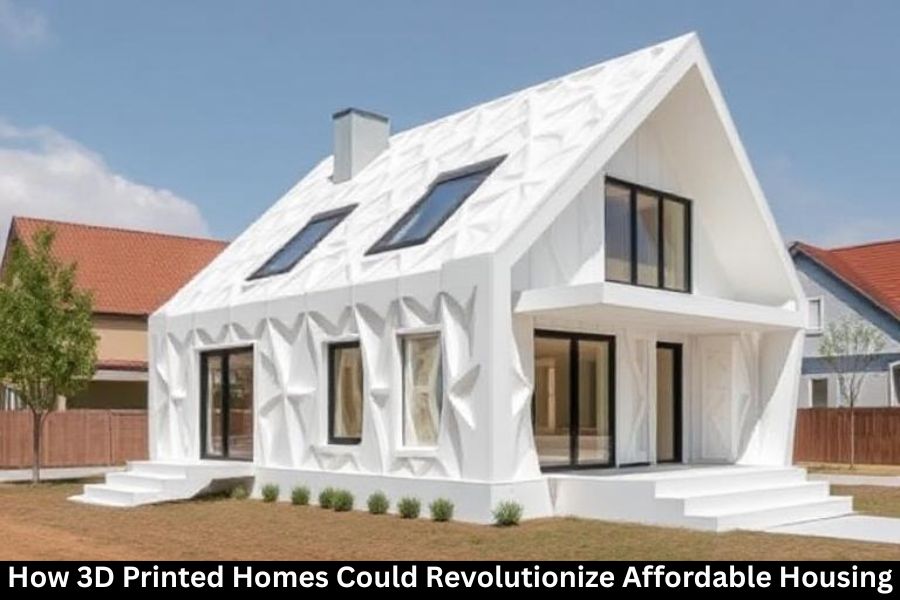
Imagine building a house the same way you print a document—layer by layer, guided by a digital design. That’s the basic idea behind 3D printed homes. Instead of bricks and long construction timelines, a giant 3D printer uses specialized materials to “print” walls and structural elements directly on-site. It sounds futuristic, but it’s already happening.
Why Affordable Housing Needs Innovation
Affordable housing is no longer just a local issue—it’s a global crisis. Traditional construction methods are slow, expensive, and heavily dependent on labor. As housing demand grows faster than supply, prices skyrocket. Something has to change, and 3D printed homes might be the breakthrough we’ve been waiting for.
The Global Affordable Housing Crisis
Rising Housing Costs Worldwide
From major cities to small towns, housing costs are climbing. Rent, materials, and labor expenses are squeezing both builders and buyers. For many families, owning a home feels like chasing a moving target.
Urbanization and Population Growth
More people are moving into cities, and cities are struggling to keep up. Limited land and high demand make traditional construction less effective at solving housing shortages.
Limitations of Traditional Construction
Conventional building methods involve multiple contractors, long timelines, and unpredictable costs. Delays due to weather, labor shortages, or material issues are common. It’s like trying to fill a bucket with a hole in it.
How 3D Printing Technology Works in Construction
The Basics of Construction 3D Printing
Construction 3D printers work by following a digital blueprint. The printer extrudes material layer by layer to form walls and structures. Once the shell is printed, finishing elements like windows, wiring, and plumbing are added.
Materials Used in 3D Printed Homes
Concrete-Based Materials
Most 3D printed homes use specially formulated concrete. It’s strong, durable, and designed to set quickly while maintaining structural integrity.
Sustainable and Recycled Materials
Some projects use recycled materials or eco-friendly blends. This reduces waste and makes construction more sustainable.
The Evolution of 3D Printed Housing
Early Experiments and Prototypes
The first 3D printed homes were simple and experimental. They proved the concept but lacked scalability.
Modern Advancements in 3D Construction
Today’s printers are faster, smarter, and more precise. Entire neighborhoods of 3D printed homes are no longer a dream—they’re becoming reality.
Benefits of 3D Printed Homes
Cost Reduction
By cutting labor and material waste, 3D printing dramatically lowers construction costs. Fewer workers and faster timelines mean lower overall expenses.
Speed of Construction
Some 3D printed homes can be built in days instead of months. Speed matters when housing demand is urgent.
Design Flexibility
Curved walls, custom layouts, and creative designs are easier to achieve with 3D printing. Architects aren’t boxed into straight lines anymore.
Reduced Labor Dependency
With automation handling most of the construction, fewer workers are needed on-site. This helps in regions facing labor shortages.
Sustainability and Environmental Impact
Reduced Construction Waste
Traditional construction generates tons of waste. 3D printing uses only the material needed, cutting waste significantly.
Energy Efficiency
3D printed homes can be designed with better insulation and thermal efficiency, lowering energy bills for homeowners.
Lower Carbon Footprint
Less waste, fewer deliveries, and efficient materials result in a smaller environmental footprint.
How 3D Printed Homes Improve Affordability
Lower Material Costs
Precise material usage reduces excess spending. Every layer has a purpose.
Faster Project Completion
Time is money. Faster builds mean lower financing and labor costs.
Scalability for Mass Housing
Once a system is in place, it can be replicated easily. This makes large-scale affordable housing projects more feasible.
Real-World Examples of 3D Printed Housing
3D Printed Homes in Developing Countries
In regions with severe housing shortages, 3D printing offers fast, low-cost solutions for safe shelters.
Projects in Developed Nations
Even in wealthy countries, 3D printed homes are being used to lower housing costs and speed up development.
Disaster Relief and Emergency Housing
After natural disasters, quick housing is critical. 3D printing can provide sturdy homes faster than traditional methods.
Challenges Facing 3D Printed Homes
Regulatory and Building Code Issues
Many building codes weren’t designed with 3D printing in mind. Updating regulations takes time.
High Initial Equipment Costs
3D printers are expensive upfront, which can limit adoption for smaller builders.
Public Perception and Trust
Some people still doubt the durability and safety of 3D printed homes. Trust will grow as more homes stand the test of time.
Comparing 3D Printed Homes vs Traditional Homes
Cost Comparison
3D printed homes are often cheaper, especially at scale. Traditional homes struggle to compete on cost efficiency.
Durability and Safety
When built correctly, 3D printed homes meet or exceed safety standards. Strength isn’t the issue—it’s awareness.
Construction Time
Weeks versus months. The difference is hard to ignore.
Role of Governments and Policy Makers
Supporting Innovation
Government incentives can accelerate adoption and reduce risk for builders.
Updating Regulations
Clear guidelines help builders and buyers feel confident about 3D printed homes.
Public-Private Partnerships
Collaboration between governments and private companies can scale affordable housing faster.
Impact on the Construction Workforce
Job Transformation, Not Job Loss
Automation changes jobs, but it doesn’t eliminate them. Workers shift from manual labor to technical roles.
New Skills and Opportunities
3D printing creates demand for designers, engineers, and machine operators.
Future of 3D Printed Affordable Housing
Technological Advancements Ahead
Printers will become faster, cheaper, and more versatile.
Integration with Smart Homes
3D printed homes can easily incorporate smart technology for energy and security.
Global Adoption Potential
As costs drop and trust grows, adoption will spread worldwide.
Common Misconceptions About 3D Printed Homes
Strength and Longevity Myths
These homes are built to last. The materials are tested and engineered for durability.
Design Limitations
Far from limiting creativity, 3D printing expands design possibilities.
Conclusion
3D printed homes are more than a construction trend—they’re a solution to one of the world’s biggest problems. By lowering costs, speeding up builds, and reducing environmental impact, this technology has the power to reshape affordable housing. The future of homebuilding isn’t just coming—it’s being printed.
FAQs
1. Are 3D printed homes safe to live in?
Yes, they meet modern safety and building standards when properly constructed.
2. How long does it take to build a 3D printed home?
The main structure can be completed in days, with finishing work taking additional time.
3. Are 3D printed homes cheaper than traditional homes?
In most cases, yes—especially for large-scale projects.
4. Can 3D printed homes withstand extreme weather?
They can be engineered to handle various climates and conditions.
5. Will 3D printed homes become common in the future?
As technology improves and costs drop, widespread adoption is likely.