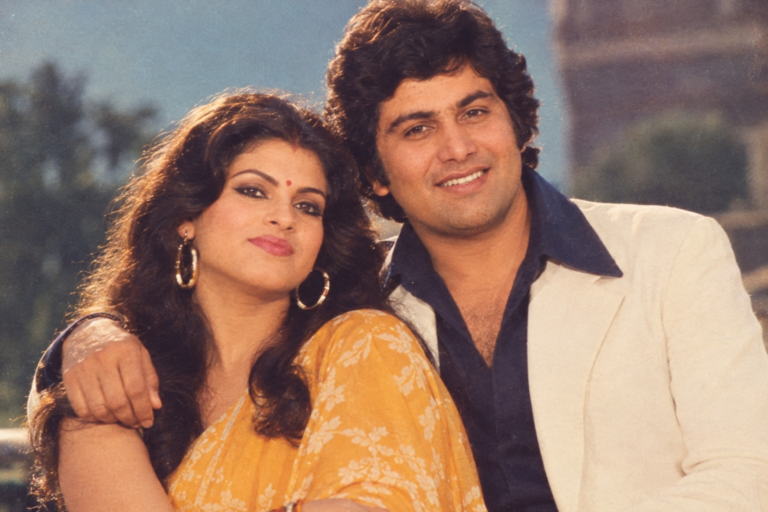
Kabuliwala by Rabindranath Tagore: A Heart-Touching Story of Love, Fatherhood, and Separation
Some stories don’t need a complicated plot to stay with you.
They simply need a human emotion that everyone can understand.
Rabindranath Tagore’s “Kabuliwala” is one such story. On the surface, it is about a little girl named Mini and a fruit seller from Kabul who visits Kolkata. But beneath this simple relationship lies a much deeper story about fatherhood, separation, childhood, migration, memory, and the universal bond between parents and children.
Written more than a century ago, “Kabuliwala” still feels remarkably relevant. It reminds us that people may come from different countries, speak different languages, and live completely different lives, yet certain emotions—especially a parent’s love for a child—are universal.
What Is Kabuliwala About?
“Kabuliwala” is a short story by Rabindranath Tagore, one of India’s most celebrated writers and the first Asian Nobel laureate in Literature.
The story is narrated by the father of a young girl named Mini. One day, Mini becomes acquainted with Rahamat, an Afghan fruit and dry-fruit seller who regularly visits Kolkata.
At first, Mini is curious about him because he looks different from the people she usually sees. Rahamat, in turn, becomes fond of the talkative little girl.
Their friendship is innocent and uncomplicated.
But Rahamat has a daughter of his own back in Afghanistan.
As the story develops, the relationship between Mini and Rahamat becomes a way for Tagore to explore something much bigger than friendship: the emotional connection between a parent and a child, even when they are separated by thousands of miles.
Kabuliwala Story Summary
The story begins with Mini, a lively and extremely talkative little girl.
She is so fond of talking that she rarely stays quiet for long. Her father, the narrator, enjoys listening to her endless questions and conversations.
One day, Mini notices a Kabuliwala, or a man from Kabul, walking down the street.
The man’s name is Rahamat. He is an Afghan dry-fruit seller who travels around Kolkata selling almonds, raisins, and other goods.
Mini is initially fascinated by him.
She is especially curious about the large bag he carries on his back. Like many children, Mini’s imagination immediately takes over. She wonders whether the bag contains something mysterious.
Eventually, Mini and Rahamat begin talking.
Their friendship grows naturally.
Rahamat enjoys Mini’s innocent questions, while Mini feels comfortable around him. He sometimes brings her small gifts such as dry fruits.
For Mini, Rahamat becomes a familiar and friendly figure.
For Rahamat, however, Mini represents something much deeper.
She reminds him of his own little daughter who is far away in Afghanistan.
Mini and Rahamat’s Beautiful Friendship
The friendship between Mini and Rahamat is the emotional center of the story.
What makes it special is that neither of them needs to understand the other’s world completely.
Mini doesn’t know much about Afghanistan.
She doesn’t understand the hardships of Rahamat’s life.
Rahamat doesn’t expect anything from her either.
They simply enjoy each other’s company.
Their conversations are often playful and innocent.
Mini’s father notices their friendship and sometimes watches them with amusement.
There is also a recurring joke between Mini and Rahamat involving the question of whether he will be put in jail.
To Mini, it is simply a game.
But later, this playful relationship takes on a completely different meaning.
And that emotional change is one of the reasons “Kabuliwala” is so memorable.
Why Does Rahamat Love Mini So Much?
Rahamat has a daughter of his own.
She is living in Afghanistan while he is away in India trying to earn money.
Every time Rahamat looks at Mini, he is reminded of his daughter.
This is an important detail because it changes the way we understand his relationship with Mini.
He isn’t simply being kind to a random child.
He sees his own daughter in her.
Mini becomes a small reminder of home.
A reminder of the child he misses.
A reminder of the life he has temporarily left behind.
And this is where Tagore’s storytelling becomes particularly powerful.
Rahamat’s love for Mini is not about nationality, religion, language, or social status.
It is about being a father.
The Turning Point in the Story
The peaceful relationship between Mini and Rahamat eventually changes.
One day, Rahamat gets into a conflict with a customer who owes him money.
The situation becomes heated, and Rahamat attacks the man.
As a result, he is arrested and sent to prison.
For years, he is separated from Mini.
Time passes.
Mini grows up.
And, as children naturally do, she changes.
The little girl who once greeted Rahamat enthusiastically is no longer the same child.
This passage of time is crucial to the story.
Rahamat has been carrying the memory of Mini and his own daughter with him, but the world around Mini has moved forward.
Rahamat Returns After Many Years
When Rahamat is finally released from prison, he returns to the neighborhood.
But everything feels different.
Mini is no longer the little girl he remembers.
She has grown into a young woman and is preparing to get married.
Rahamat approaches the house hoping to see her.
But when he finally encounters Mini, she doesn’t recognize him in the same way.
The carefree friendship they once shared is gone.
Mini is now shy and occupied with the preparations for her wedding.
Rahamat is shocked by how much she has changed.
And in that moment, he realizes something painful:
His own daughter must have grown up too.
The Most Emotional Moment in Kabuliwala
One of the most moving moments comes when Rahamat realizes that his daughter is probably no longer the little child he remembers.
For years, he has carried the image of his daughter in his mind.
He has imagined her as the young girl he left behind.
But time doesn’t stop.
While he was in prison, his daughter was growing up.
The realization breaks through his emotional defenses.
Rahamat takes out a small piece of paper that carries the impression of his daughter’s hand.
It is an old reminder of the child he loves.
That simple piece of paper becomes one of the most powerful symbols in the story.
It represents memory, love, distance, and the passage of time.
The Narrator’s Compassion
Mini’s father is also an important character in the story.
At first, he is somewhat cautious about Rahamat.
After all, Rahamat is a stranger, and Mini is a young child.
But over time, he understands the depth of Rahamat’s feelings.
When Rahamat realizes that Mini has grown up, Mini’s father understands that the same thing must have happened to Rahamat’s daughter.
He decides to help Rahamat return to Afghanistan so that he can reunite with his child.
This decision comes at a cost.
The narrator sacrifices some of the money intended for Mini’s wedding celebrations to help Rahamat travel home.
It is a small act of generosity, but emotionally it is enormous.
The Central Theme of Kabuliwala
The most important theme in “Kabuliwala” is parental love.
Tagore shows that a father’s love doesn’t depend on nationality or geography.
Rahamat is Afghan.
Mini is Indian.
Their lives are completely different.
Yet Rahamat sees his own daughter whenever he looks at Mini.
This creates a powerful connection between two people who otherwise have very little in common.
Tagore is essentially saying that human emotions can cross borders more easily than people can.
Fatherhood and Separation
Another major theme is separation.
Rahamat leaves his daughter behind because he needs to earn a living.
He travels far from home to support his family.
This is a reality experienced by many migrant workers and families.
The story therefore isn’t only about an Afghan fruit seller.
It is also about anyone who has had to leave home because circumstances demanded it.
Distance may separate people physically, but it doesn’t necessarily weaken emotional attachment.
Sometimes, distance makes people understand what they value even more.
Childhood and Innocence
Mini represents childhood innocence.
She doesn’t judge Rahamat based on where he comes from.
She doesn’t care about social differences.
She simply sees him as someone interesting and friendly.
Her relationship with Rahamat develops without the prejudices adults sometimes carry.
This makes Mini an important symbol in the story.
Through her, Tagore shows how naturally children can connect with people when they aren’t burdened by social assumptions.
Time Changes Everything
Perhaps one of the saddest messages in “Kabuliwala” is that time never waits for anyone.
Rahamat goes to prison believing that Mini will remain the little girl he remembers.
But when he returns, she has grown up.
His own daughter has also grown older.
He has missed years of her life.
This is what makes the story more than a simple tale of friendship.
It is also a reminder that life continues even when we are away from the people we love.
The Meaning of the Kabuliwala’s Daughter
Rahamat’s daughter is never physically present in most of the story, but she is emotionally present throughout it.
She is the reason Rahamat connects with Mini.
She is the reason he feels homesick.
She is the reason his reunion with Mini becomes so emotional.
In a way, Tagore doesn’t need to show the daughter directly.
The father’s memories are enough.
That is a subtle but effective storytelling technique.
The Importance of the Handprint
The handprint carried by Rahamat is one of the most memorable images in “Kabuliwala.”
It is simple, but its meaning is enormous.
A child’s hand is small.
Years later, that hand may be completely different.
But for a parent living far away, a childhood handprint can become a precious piece of memory.
The handprint represents a moment that Rahamat wants to preserve.
It is proof that his daughter once existed in that particular form—the little girl he remembers.
It also symbolizes something every parent eventually experiences:
Children grow up, whether we are ready for it or not.
Why Kabuliwala Still Feels Relevant Today
Although Tagore wrote “Kabuliwala” in a very different era, its central emotions remain familiar.
Today, millions of people live away from their families for work, education, or other responsibilities.
Parents miss children.
Children miss parents.
Families maintain relationships through phone calls and video chats instead of letters and physical visits.
The technology has changed.
The emotions haven’t.
The story also speaks to the experience of immigrants and migrant workers who leave their homes to create better lives for their families.
Rahamat’s journey is therefore still recognizable to modern readers.
Kabuliwala as a Story About Humanity
One of the greatest strengths of “Kabuliwala” is that it doesn’t make its message complicated.
It simply puts two people from different backgrounds in the same emotional space.
Rahamat is not presented merely as an outsider.
He is a father.
Mini is not merely a little girl.
She is someone’s child.
And suddenly, the distance between them becomes much smaller.
This is what makes the story universal.
You don’t need to be from Kabul.
You don’t need to have lived in Kolkata.
You don’t even need to have experienced migration.
If you have ever loved someone and feared losing them, you can understand Rahamat.
What We Can Learn From Kabuliwala
There are several lessons readers can take from the story.
1. Love goes beyond borders
People may belong to different cultures, but emotions can be universal.
2. Time is precious
We often assume that we will have plenty of time with the people we love.
Life doesn’t always give us that luxury.
3. Parents carry their children wherever they go
Even when separated physically, parents continue to carry memories of their children.
4. Kindness can change someone’s life
Mini’s father doesn’t solve Rahamat’s entire life, but his compassion gives Rahamat a chance to reconnect with his daughter.
5. People are more than their identities
Rahamat is described as a Kabuliwala, but Tagore makes us see the person behind the label—a father, a worker, and a human being who misses home.
Character Analysis of Mini
Mini is one of the most lovable characters in the story.
She is energetic, curious, and outspoken.
Her constant questions reflect the innocence of childhood.
But Mini also represents something larger.
She symbolizes a world before social boundaries become complicated.
She doesn’t initially see Rahamat as a foreigner.
She sees him as a person.
Her relationship with him is therefore simple in a way adult relationships often aren’t.
Character Analysis of Rahamat
Rahamat is the emotional heart of “Kabuliwala.”
He is a hardworking man who travels far from home to make a living.
His rough appearance might initially make him seem intimidating, but his relationship with Mini reveals his softer side.
His love for his daughter is what makes him relatable.
He is not simply a merchant from Kabul.
He is a father who misses his child.
And that is perhaps exactly what Tagore wants readers to understand.
The Writing Style of Rabindranath Tagore
Tagore’s writing in “Kabuliwala” is simple but deeply emotional.
He doesn’t need excessive drama to make the reader feel something.
Instead, he builds the story around ordinary interactions.
A conversation.
A visit.
A small gift.
A memory.
A piece of paper with a child’s handprint.
These small details gradually create an emotional impact.
That’s one reason the story continues to be read and discussed more than a century after it was written.
Is Kabuliwala a Sad Story?
Yes, but it isn’t simply a story about sadness.
It contains humor, warmth, innocence, and affection.
The early friendship between Mini and Rahamat is genuinely charming.
The sadness becomes stronger later because the reader understands what Rahamat has lost.
The story ultimately leaves us with a bittersweet feeling.
Rahamat has suffered a great deal, but he is given hope that he can return home and find his daughter.
So the ending is emotional, but not completely hopeless.
Final Thoughts on Kabuliwala
“Kabuliwala” is a small story with a remarkably large heart.
What begins as a friendship between a little girl and a fruit seller gradually becomes a story about fathers, daughters, migration, loneliness, memory, and the passage of time.
Rahamat and Mini come from completely different worlds, but their relationship reveals something simple:
A parent’s love for a child is not limited by borders.
The most heartbreaking part of the story isn’t Rahamat’s imprisonment or even his separation from Mini.
It is the realization that while he was away, life continued.
Mini grew up.
His own daughter grew up.
And the childhood memories he carried so carefully could never be recreated.
Perhaps that’s why “Kabuliwala” remains so powerful.
It reminds us to appreciate the people we love while we still have the opportunity to be with them.
Because sometimes, the hardest thing about time is not that it passes.
It’s that we don’t always notice what it takes with it.
Frequently Asked Questions
1. Who wrote Kabuliwala?
“Kabuliwala” was written by Rabindranath Tagore, the renowned Bengali writer, poet, philosopher, and Nobel Prize-winning author.
2. Who is the Kabuliwala in the story?
The Kabuliwala is Rahamat, an Afghan fruit and dry-fruit seller who travels to Kolkata for work. He develops a close emotional bond with a young girl named Mini because she reminds him of his daughter back home.
3. What is the main theme of Kabuliwala?
The main theme is parental love and separation. The story also explores friendship, childhood innocence, migration, memory, compassion, and the passage of time.
4. Why does Rahamat become attached to Mini?
Rahamat becomes attached to Mini because she reminds him of his own daughter, whom he has left behind in Afghanistan while working in Kolkata.
5. What does the handprint symbolize in Kabuliwala?
The handprint of Rahamat’s daughter symbolizes memory, parental love, childhood, and the passage of time. It represents the precious memory of the daughter he left behind.
6. What is the message of Kabuliwala?
The story shows that human emotions can transcend nationality, culture, and distance. It particularly emphasizes the universal nature of a parent’s love for their child.
7. Why is Kabuliwala still relevant today?
The story remains relevant because separation, migration, family responsibilities, and the emotional bond between parents and children are still part of everyday life. Its message about compassion and shared humanity also remains universal.