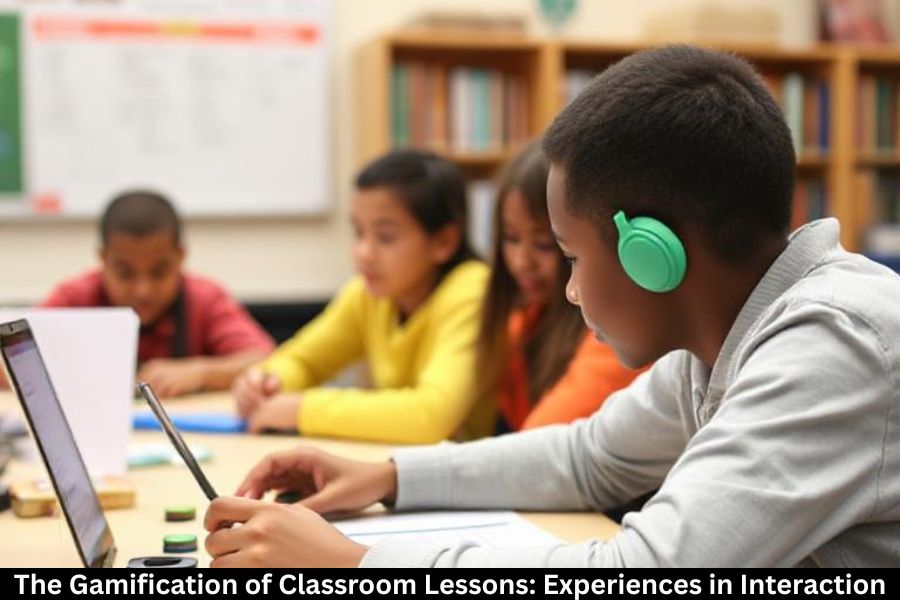
Classrooms don’t have to feel like silent libraries anymore. Today, learning can look more like a quest, a challenge, or even a cooperative mission. That’s the magic of gamification. It takes the mechanics that make games addictive and applies them to education—without turning learning into a joke.
What Is Gamification in the Classroom?
Gamification is the use of game elements—like points, levels, challenges, and rewards—in non-game settings. In classrooms, it transforms lessons into interactive experiences where students do instead of just listen.
Why Gamification Is Gaining Popularity
Let’s be honest: attention spans are shrinking. Gamification meets students where they are—digital, interactive, and feedback-driven—while keeping learning meaningful.
The Psychology Behind Gamified Learning
Motivation, Rewards, and Engagement
Games tap into intrinsic and extrinsic motivation. Students feel a sense of achievement, progress, and purpose—like leveling up in real life.
How the Brain Responds to Game Mechanics
Rewards trigger dopamine, the brain’s “feel-good” chemical. That positive reinforcement encourages repetition—and repetition strengthens learning.
Traditional Teaching vs Gamified Lessons
Passive Learning vs Active Participation
Traditional lectures often place students in listening mode. Gamification flips the script. Students interact, decide, fail, retry, and succeed.
Why Interaction Matters More Than Memorization
When learners actively engage, they don’t just remember—they understand.
Core Elements of Classroom Gamification
Points, Badges, and Leaderboards
These elements add structure and visible progress. When used wisely, they motivate without overwhelming.
Levels, Challenges, and Progress Tracking
Breaking lessons into levels makes learning feel achievable—like climbing a staircase instead of scaling a wall.
Feedback as Instant Motivation
Immediate feedback helps students adjust quickly, reinforcing growth instead of fear of failure.
Gamification and Student Engagement
Turning Boredom into Curiosity
A quiz becomes a challenge. Homework becomes a mission. Suddenly, students lean in instead of checking out.
Encouraging Participation from All Learners
Even quiet students find a voice through interactive tasks and low-pressure challenges.
Interactive Learning Experiences Through Games
Role-Playing and Simulation-Based Learning
Simulations allow students to step into real-world roles—scientists, historians, leaders—and learn by doing.
Storytelling as a Learning Tool
Narratives turn lessons into journeys. A good story keeps learners emotionally invested.
Technology’s Role in Gamified Classrooms
Educational Apps and Platforms
Digital tools make gamification scalable and trackable, offering personalized feedback.
Virtual and Augmented Reality in Learning
VR and AR bring lessons to life—imagine exploring ancient cities or walking through the human body.
Gamification Across Different Subjects
Gamifying Math and Science
Problem-solving becomes a challenge, not a chore. Mistakes turn into learning moments.
Language Arts and History Through Games
Quests, debates, and story-driven missions make abstract concepts tangible.
Creative Subjects and Interactive Challenges
Art, music, and drama thrive on gamified expression and experimentation.
The Teacher’s Role in Gamified Learning
From Instructor to Game Master
Teachers guide, challenge, and adapt—not just deliver content.
Designing Meaningful Game-Based Activities
The goal isn’t entertainment. It’s engagement with purpose.
Student Experiences and Social Interaction
Collaboration Over Competition
Team-based challenges encourage cooperation and peer learning.
Building Communication and Teamwork Skills
Gamified lessons mirror real-life collaboration—an essential life skill.
Benefits of Gamification in the Classroom
Improved Learning Outcomes
Students retain information longer and apply it more effectively.
Boosting Confidence and Retention
Success in small challenges builds confidence and momentum.
Challenges and Limitations of Gamification
Overcompetition and Burnout
Too much focus on winning can discourage some learners.
Balancing Fun with Educational Value
Games should serve learning—not overshadow it.
Inclusivity and Accessibility in Gamified Lessons
Designing Games for Diverse Learners
Flexible difficulty levels and varied tasks support different learning styles.
Avoiding Exclusion and Bias
Inclusive design ensures everyone can participate and succeed.
Measuring Success in Gamified Classrooms
Beyond Scores and Badges
Real success shows up in understanding, creativity, and collaboration.
Assessing Real Understanding
Reflection and discussion matter just as much as points.
The Future of Gamification in Education
Personalized Learning Experiences
Adaptive systems will tailor challenges to each learner.
Gamification Beyond the Classroom
Lifelong learning, corporate training, and online education are next.
Conclusion
Gamification is not about turning school into a playground—it’s about making learning interactive, meaningful, and human. When students are engaged, motivated, and connected, learning stops feeling like work and starts feeling like an experience worth showing up for.
Frequently Asked Questions (FAQs)
1. Is gamification suitable for all age groups?
Yes, when adapted appropriately to developmental levels.
2. Does gamification reduce academic seriousness?
No, it enhances focus and understanding when designed thoughtfully.
3. Can gamification work without technology?
Absolutely. Simple classroom games can be just as effective.
4. How do teachers avoid overcompetition?
By focusing on collaboration, growth, and mastery instead of ranking.
5. Is gamification a long-term solution or a trend?
It’s a long-term strategy aligned with how people naturally learn.