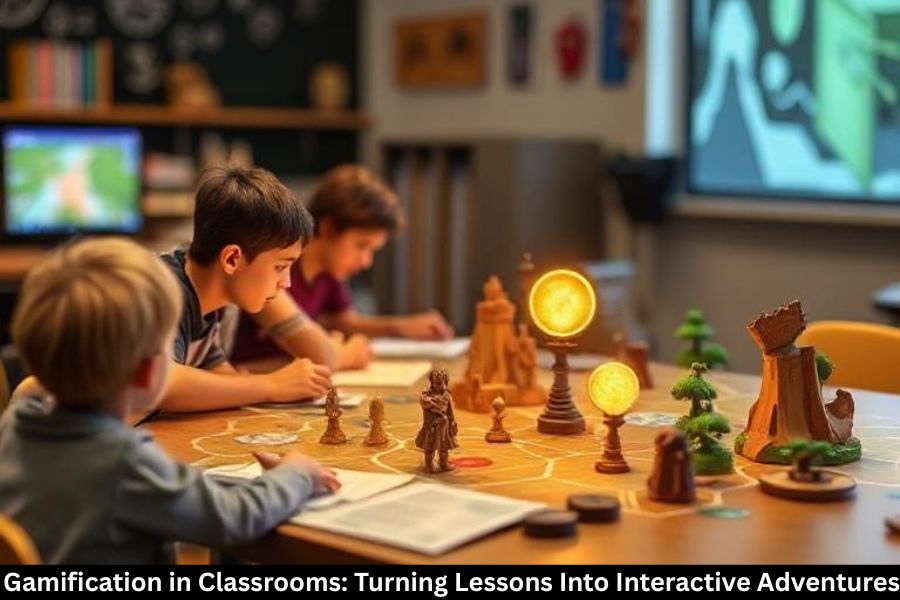
Let’s be honest—traditional classrooms often struggle to compete with smartphones, video games, and endless digital entertainment. Chalk-and-talk methods that worked decades ago now feel outdated to students growing up in a fast-paced, interactive world. So how do educators capture attention, spark curiosity, and make learning stick?
Enter gamification in classrooms—a powerful approach that transforms ordinary lessons into interactive adventures. When learning feels like a game, students stop asking “Is this on the test?” and start asking “What’s next?”
Why Traditional Classrooms Are Losing Student Attention
Students today are wired for interaction. Passive listening feels boring when they’re used to instant feedback and engaging digital experiences. Without engagement, learning turns into memorization instead of understanding.
The Rise of Gamification in Modern Education
Gamification taps into what students already love—games. By borrowing elements like points, challenges, and rewards, educators make lessons feel meaningful and exciting without sacrificing academic goals.
What Is Gamification in Education
Gamification vs Game-Based Learning
These terms sound similar, but they’re not the same.
Key Differences Explained Simply
Gamification adds game elements to lessons. Game-based learning uses actual games as the lesson. Think of gamification as adding spices to a dish, not replacing the meal.
Core Elements of Gamification
Points, badges, levels, challenges, storytelling, and feedback loops—these elements create motivation and structure.
Why Gamification Works So Well in Classrooms
The Psychology Behind Games and Learning
Games trigger dopamine—the brain’s “feel-good” chemical. Every small win boosts motivation and encourages persistence.
Motivation, Rewards, and Engagement
Gamification gives students clear goals and instant feedback.
Intrinsic vs Extrinsic Motivation
The trick is balance. Rewards should inspire curiosity, not replace genuine interest in learning.
Benefits of Gamification for Students
Increased Engagement and Participation
Even quiet students feel encouraged to participate when learning feels playful.
Better Knowledge Retention
When students experience lessons instead of memorizing them, concepts stick longer.
Improved Collaboration and Social Skills
Learning Through Healthy Competition
Team challenges promote cooperation while friendly competition keeps energy high.
Benefits of Gamification for Teachers
Easier Classroom Management
Engaged students are less disruptive—simple as that.
Real-Time Feedback and Assessment
Gamified systems make progress visible instantly.
Making Teaching More Enjoyable
When students are excited, teaching feels rewarding instead of exhausting.
Popular Gamification Techniques Used in Classrooms
Points, Badges, and Leaderboards
These provide instant recognition and motivation.
Levels and Progress Bars
Students love seeing how far they’ve come—and how close they are to leveling up.
Quests, Challenges, and Missions
Storytelling as a Learning Tool
Turn lessons into adventures where students become explorers, scientists, or historians.
Gamification Across Different Subjects
Gamifying Math and Science
Solve problems to unlock levels or earn power-ups.
Gamification in Language and Literature
Vocabulary battles, storytelling quests, and reading challenges bring words to life.
History and Social Studies as Interactive Adventures
Role-Playing and Simulations
Let students step into historical roles and make decisions that shape outcomes.
Digital Tools and Platforms for Classroom Gamification
Learning Apps and Online Platforms
Many platforms offer quizzes, challenges, and rewards.
Gamified Learning Management Systems
Progress tracking becomes fun instead of stressful.
Offline Gamification Ideas
Low-Tech, High-Impact Strategies
Board games, card challenges, and classroom missions work without screens.
Designing an Effective Gamified Lesson
Setting Clear Learning Objectives
Games should support learning—not distract from it.
Balancing Fun and Education
Fun opens the door; learning walks through it.
Tracking Progress Without Pressure
Avoiding Over-Competition
Focus on personal progress, not just leaderboards.
Challenges and Limitations of Gamification
Risk of Distraction
Too much fun without focus can derail learning.
Inequality in Participation
Not all students enjoy competition equally.
Time and Resource Constraints
Teacher Training and Support
Proper training ensures gamification is effective, not chaotic.
Gamification and Student Motivation
Building Confidence Through Small Wins
Small achievements create momentum.
Encouraging a Growth Mindset
Learning From Failure
Games normalize failure as part of progress.
Future of Gamification in Education
AI, VR, and Immersive Learning
Virtual worlds and adaptive challenges are changing education.
Personalized Learning Paths
Gamification allows students to learn at their own pace.
Gamification Beyond the Classroom
Lifelong learning is becoming more interactive than ever.
Common Myths About Gamification in Classrooms
Gamification Is Just Playing Games
It’s structured learning with purpose.
It Reduces Academic Rigor
When done right, it deepens understanding.
Conclusion
Gamification in classrooms isn’t a trend—it’s a transformation. By turning lessons into interactive adventures, educators spark curiosity, boost motivation, and create meaningful learning experiences. When students feel like heroes in their own learning journey, education stops being a chore and starts becoming an adventure worth taking.
FAQs
Is gamification suitable for all age groups?
Yes, it can be adapted for any age.
Does gamification really improve learning outcomes?
Research shows higher engagement and retention.
Can gamification work without technology?
Absolutely—many strategies are offline.
How can teachers start gamifying lessons easily?
Begin with points, challenges, and simple rewards.
What are the biggest mistakes in classroom gamification?
Overusing competition and ignoring learning goals.